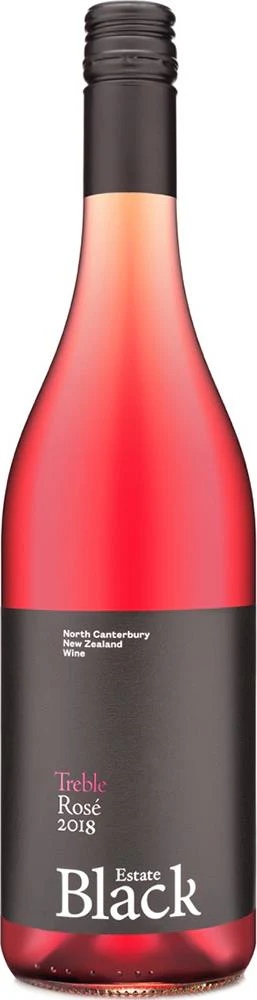
Black Estate Treble Waipara Rosé 2018
A co-ferment of fruit from their 3 vineyards. Wild strawberry compote, rhubarb, sandstone and cinnamon on the nose. The pallet is bright, juicy and long with salivating tamarillo, red currant jelly, vine cuttings, liquorice, and spring water.
The 2018 Black Estate Treble Rose was sourced from all three of Black Estate's certified organic hillside vineyards in the Omihi sub-district of North Canterbury. Chenin Blanc and Cabernet Franc were sourced from the Home vineyard which grows on sedimentary clay soils. This vineyard was planted in 2011 at a vine density of 6172 vines per hectare. Pinot Noir and Chardonnay were sourced from the Netherwood vineyards sandstone soils, planted in 1986 at a vine density of 4500 vines per hectare. Riesling was sourced from the Damsteep Vineyard which at the foot of the hill has rich Waipara clay soils planted in 2000 at a vine density of 5000 vines per hectare.
Moderate winter rain fall allowed budburst to occur in spring with the soil at field capacity. A mild frost free spring meant rapid and even establishment of canopies. Six weeks of no rain in late spring brought on an early and rapid flowering that was complete across all blocks and all varieties within 7 days. Intermittent rainfall from December through the remainder of the growing season created useful vigour but increased the requirement for under vine weeding, canopy thinning and trimming. A hot humid summer increased the risk of disease from powdery Mildew or botrytis so our vineyard team worked hard right up to harvest removing leaves and some fruit to ensure maximum ventilation in the canopies and ensure we could harvest ripe and disease free fruit. Harvest commenced mid-march and was condensed and early in most blocks. Diligent hand harvesting was crucial checking that each bunch was suitable for harvest. Growers in the region were very grateful for warm, dry, and windy conditions from March 25 to April 8 2018 that finished off ripening perfectly. 2018 will be remembered as a vigorous, warm, and humid season that was demanding but produced outstanding fruit.
Co fermentation of Pinot Noir (62%), Riesling (22%), Chenin Blanc (7%), Cabernet Franc (6%), Chardonnay (3%). 100% whole cluster, with partial carbonic maceration fermentation, in a mixture of 1.8 to 2.0 Ton vats. Membrane pressed after 1-28 days, and completed fermentation in stainless steel tank. Maturation on fermentation lees for 10 weeks. Sulphites added. Coarse filtered.
Food Pairing: Enjoy on it's own or serve with your favourite tapas or antipasto.
Product Information
Product Information
Shipping & Returns
Shipping & Returns
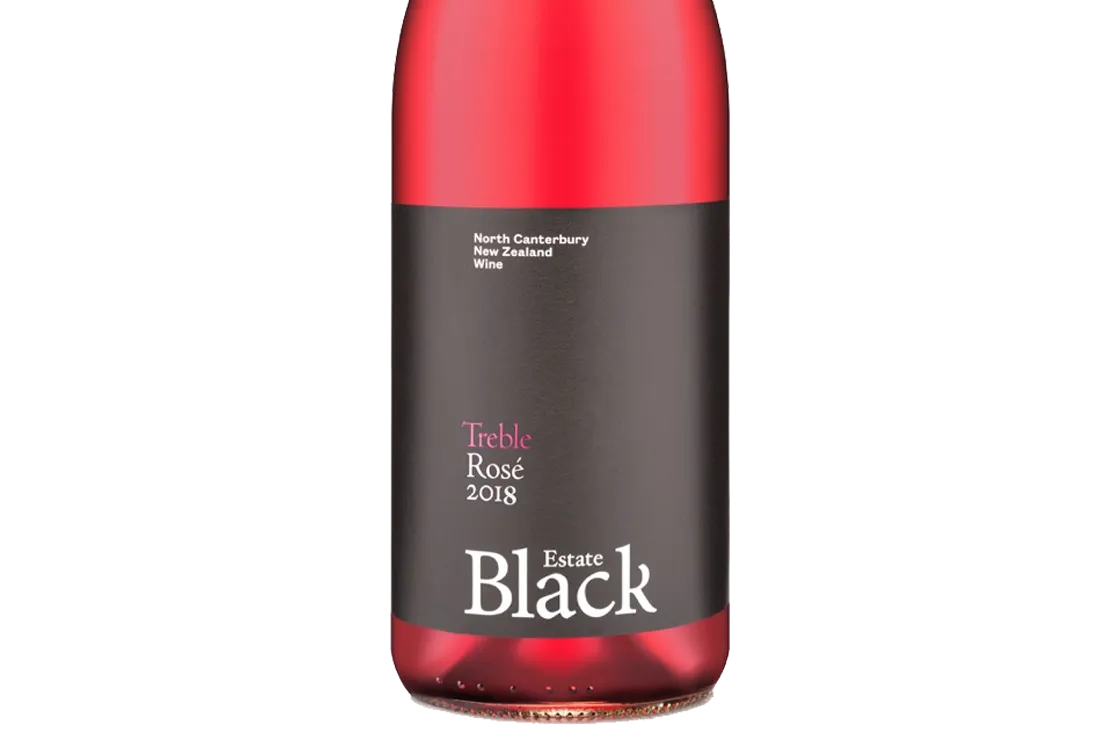
Black Estate Treble Waipara Rosé 2018
Black Estate Treble Waipara Rosé 2018
A co-ferment of fruit from their 3 vineyards. Wild strawberry compote, rhubarb, sandstone and cinnamon on the nose. The pallet is bright, juicy and long with salivating tamarillo, red currant jelly, vine cuttings, liquorice, and spring water.
The 2018 Black Estate Treble Rose was sourced from all three of Black Estate's certified organic hillside vineyards in the Omihi sub-district of North Canterbury. Chenin Blanc and Cabernet Franc were sourced from the Home vineyard which grows on sedimentary clay soils. This vineyard was planted in 2011 at a vine density of 6172 vines per hectare. Pinot Noir and Chardonnay were sourced from the Netherwood vineyards sandstone soils, planted in 1986 at a vine density of 4500 vines per hectare. Riesling was sourced from the Damsteep Vineyard which at the foot of the hill has rich Waipara clay soils planted in 2000 at a vine density of 5000 vines per hectare.
Moderate winter rain fall allowed budburst to occur in spring with the soil at field capacity. A mild frost free spring meant rapid and even establishment of canopies. Six weeks of no rain in late spring brought on an early and rapid flowering that was complete across all blocks and all varieties within 7 days. Intermittent rainfall from December through the remainder of the growing season created useful vigour but increased the requirement for under vine weeding, canopy thinning and trimming. A hot humid summer increased the risk of disease from powdery Mildew or botrytis so our vineyard team worked hard right up to harvest removing leaves and some fruit to ensure maximum ventilation in the canopies and ensure we could harvest ripe and disease free fruit. Harvest commenced mid-march and was condensed and early in most blocks. Diligent hand harvesting was crucial checking that each bunch was suitable for harvest. Growers in the region were very grateful for warm, dry, and windy conditions from March 25 to April 8 2018 that finished off ripening perfectly. 2018 will be remembered as a vigorous, warm, and humid season that was demanding but produced outstanding fruit.
Co fermentation of Pinot Noir (62%), Riesling (22%), Chenin Blanc (7%), Cabernet Franc (6%), Chardonnay (3%). 100% whole cluster, with partial carbonic maceration fermentation, in a mixture of 1.8 to 2.0 Ton vats. Membrane pressed after 1-28 days, and completed fermentation in stainless steel tank. Maturation on fermentation lees for 10 weeks. Sulphites added. Coarse filtered.
Food Pairing: Enjoy on it's own or serve with your favourite tapas or antipasto.
Product Information
Product Information
Shipping & Returns
Shipping & Returns
Description
A co-ferment of fruit from their 3 vineyards. Wild strawberry compote, rhubarb, sandstone and cinnamon on the nose. The pallet is bright, juicy and long with salivating tamarillo, red currant jelly, vine cuttings, liquorice, and spring water.
The 2018 Black Estate Treble Rose was sourced from all three of Black Estate's certified organic hillside vineyards in the Omihi sub-district of North Canterbury. Chenin Blanc and Cabernet Franc were sourced from the Home vineyard which grows on sedimentary clay soils. This vineyard was planted in 2011 at a vine density of 6172 vines per hectare. Pinot Noir and Chardonnay were sourced from the Netherwood vineyards sandstone soils, planted in 1986 at a vine density of 4500 vines per hectare. Riesling was sourced from the Damsteep Vineyard which at the foot of the hill has rich Waipara clay soils planted in 2000 at a vine density of 5000 vines per hectare.
Moderate winter rain fall allowed budburst to occur in spring with the soil at field capacity. A mild frost free spring meant rapid and even establishment of canopies. Six weeks of no rain in late spring brought on an early and rapid flowering that was complete across all blocks and all varieties within 7 days. Intermittent rainfall from December through the remainder of the growing season created useful vigour but increased the requirement for under vine weeding, canopy thinning and trimming. A hot humid summer increased the risk of disease from powdery Mildew or botrytis so our vineyard team worked hard right up to harvest removing leaves and some fruit to ensure maximum ventilation in the canopies and ensure we could harvest ripe and disease free fruit. Harvest commenced mid-march and was condensed and early in most blocks. Diligent hand harvesting was crucial checking that each bunch was suitable for harvest. Growers in the region were very grateful for warm, dry, and windy conditions from March 25 to April 8 2018 that finished off ripening perfectly. 2018 will be remembered as a vigorous, warm, and humid season that was demanding but produced outstanding fruit.
Co fermentation of Pinot Noir (62%), Riesling (22%), Chenin Blanc (7%), Cabernet Franc (6%), Chardonnay (3%). 100% whole cluster, with partial carbonic maceration fermentation, in a mixture of 1.8 to 2.0 Ton vats. Membrane pressed after 1-28 days, and completed fermentation in stainless steel tank. Maturation on fermentation lees for 10 weeks. Sulphites added. Coarse filtered.
Food Pairing: Enjoy on it's own or serve with your favourite tapas or antipasto.