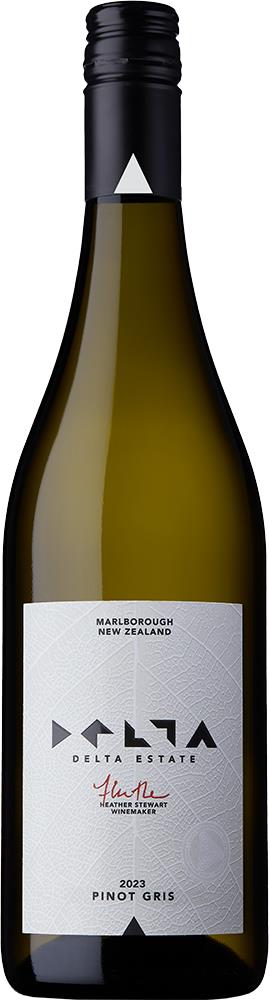
Greywacke Marlborough Pinot Gris 2014
A plush concoction of poached pears, red apples and quince jelly make for a rich aromatic profile with additional hints of honeysuckle and a cardamom-like spiciness. The palate has ample body, succulent ripeness and a herbal savouriness giving the wine an intriguing array of flavours in a supple, richly concentrated just off-dry style.
Much of the fruit for this wine is from the Selection Ovaille and Mission clones grown at Wrekin Terrace Vineyard in the Brancott Valley, a valley floor site on gravelly clay-loam soils typical of the Southern Valleys. A smaller parcel of the newly released Entav 52 clone (known for its small bunch and berry size) was grown at Riverbrook Vineyard in Rapaura, in young alluvial soils containing high proportions of greywacke river stones. The vines weretrained on a two-cane VSP (vertical shoot positioning) trellis and crop thinning is carried out to target a modest yield of 7.5 T/Ha.
The three clones were hand-picked separately at high ripeness levels and whole bunch pressed using very low maceration press cycles. The resulting juice was coldsettled, the clear juice then racked to fermentation vessels. About half of the juice was fermented in stainless steel tanks and the balance was filled into old French oak barriques. Roughly 75% of the juice was allowed to undergo spontaneous indigenous yeast fermentation.
Product Information
Product Information
Shipping & Returns
Shipping & Returns
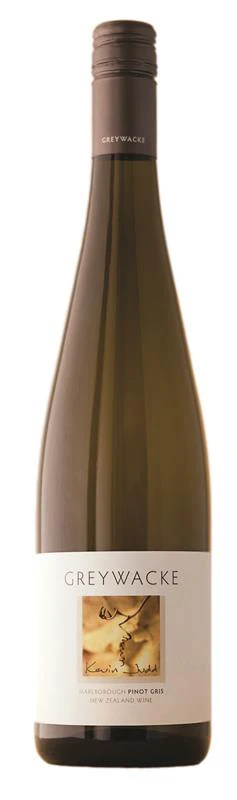
Greywacke Marlborough Pinot Gris 2014
Greywacke Marlborough Pinot Gris 2014
A plush concoction of poached pears, red apples and quince jelly make for a rich aromatic profile with additional hints of honeysuckle and a cardamom-like spiciness. The palate has ample body, succulent ripeness and a herbal savouriness giving the wine an intriguing array of flavours in a supple, richly concentrated just off-dry style.
Much of the fruit for this wine is from the Selection Ovaille and Mission clones grown at Wrekin Terrace Vineyard in the Brancott Valley, a valley floor site on gravelly clay-loam soils typical of the Southern Valleys. A smaller parcel of the newly released Entav 52 clone (known for its small bunch and berry size) was grown at Riverbrook Vineyard in Rapaura, in young alluvial soils containing high proportions of greywacke river stones. The vines weretrained on a two-cane VSP (vertical shoot positioning) trellis and crop thinning is carried out to target a modest yield of 7.5 T/Ha.
The three clones were hand-picked separately at high ripeness levels and whole bunch pressed using very low maceration press cycles. The resulting juice was coldsettled, the clear juice then racked to fermentation vessels. About half of the juice was fermented in stainless steel tanks and the balance was filled into old French oak barriques. Roughly 75% of the juice was allowed to undergo spontaneous indigenous yeast fermentation.
Product Information
Product Information
Shipping & Returns
Shipping & Returns
Description
A plush concoction of poached pears, red apples and quince jelly make for a rich aromatic profile with additional hints of honeysuckle and a cardamom-like spiciness. The palate has ample body, succulent ripeness and a herbal savouriness giving the wine an intriguing array of flavours in a supple, richly concentrated just off-dry style.
Much of the fruit for this wine is from the Selection Ovaille and Mission clones grown at Wrekin Terrace Vineyard in the Brancott Valley, a valley floor site on gravelly clay-loam soils typical of the Southern Valleys. A smaller parcel of the newly released Entav 52 clone (known for its small bunch and berry size) was grown at Riverbrook Vineyard in Rapaura, in young alluvial soils containing high proportions of greywacke river stones. The vines weretrained on a two-cane VSP (vertical shoot positioning) trellis and crop thinning is carried out to target a modest yield of 7.5 T/Ha.
The three clones were hand-picked separately at high ripeness levels and whole bunch pressed using very low maceration press cycles. The resulting juice was coldsettled, the clear juice then racked to fermentation vessels. About half of the juice was fermented in stainless steel tanks and the balance was filled into old French oak barriques. Roughly 75% of the juice was allowed to undergo spontaneous indigenous yeast fermentation.