Mt Difficulty Bannockburn Pinot Noir 2023
"Classic Central Otago swagger here, with rich, dark cherry and Black Doris plum plushness, subtle scents of dried thyme along with smoky, softly charry oak. The mouthfeel is fresh, polished, bright and energetically fruity, the tannins are dense yet finely structured, adding more ‘mmm’ to its smooth finish" Dish Magazine, Top NZ Pinot 2025
Dark garnet with red and black cherry on the nose and a spice profile of szechaun pepper, cardamom and star anise. Inviting and opulent, the palate is flush with sweet cherry and blueberry, followed by trademark earth and savoury notes and framed by baking spice and fine grained French oak. The fruit floods through to the finish with a juicy balance, indicating acidity that will keep the wine aging well. Mt Difficulty Bannockburn Pinot Noir is best after two years and will age gracefully for a further 12 years given optimal cellaring conditions.
Grapes for Bannockburn Pinot Noir come exclusively from estate and winery managed vineyards situated on the south side of the Kawarau River. While subject to the seasonal and diurnal temperature extremes of Central Otago, each vineyard has a specific terroir and a variety of low fertility soil types: light sands, clays, loams and gravels. The majority of grapes come from earlier plantings which are predominantly clones 5, 6 and 10/5, while more recent plantings are a mix of Dijon clones 113, 115, 667 and 777.
We started harvesting our Pinot Noir on the 26th March, a week later than the previous year, and continued through until the 20th April. Above average yields and berry size were indicative of the excellent flowering conditions. Where possible, we tried to co-ferment different clonal lots from the same vineyard, while vineyards are kept separate. Around 3/4 of ferments were de-stemmed only; the remaining containing 15-40% whole clusters. The must underwent 6 days of cold maceration, with the occasional hand plunge, followed by heating and fermentation with indigenous yeasts. The ferments lasted for an average of 8 days during which time they were pumped over or hand plunged once or twice daily with the temperature peaking at 30°C. The wine stayed on skins for a further 7-9 days post-dryness, and were plunged only occasionally. When the wine tasted in harmony, it was pressed off to barrel where it resided on lees for 12 months. It underwent malolactic fermentation in the spring, was racked out of barrel in late autumn and filtered, but not fined, prior to bottling.
Product Information
Product Information
Shipping & Returns
Shipping & Returns
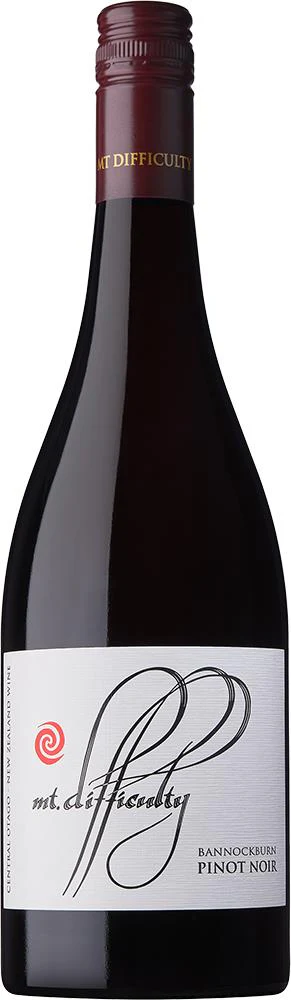
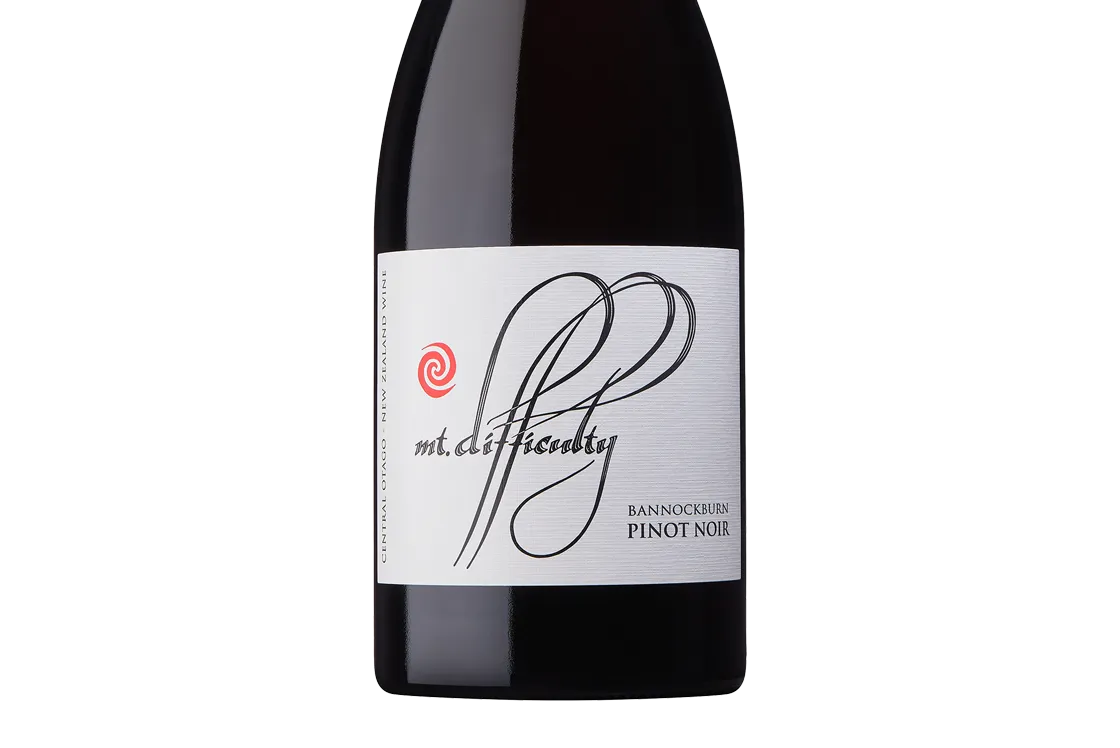
Mt Difficulty Bannockburn Pinot Noir 2023
Mt Difficulty Bannockburn Pinot Noir 2023
"Classic Central Otago swagger here, with rich, dark cherry and Black Doris plum plushness, subtle scents of dried thyme along with smoky, softly charry oak. The mouthfeel is fresh, polished, bright and energetically fruity, the tannins are dense yet finely structured, adding more ‘mmm’ to its smooth finish" Dish Magazine, Top NZ Pinot 2025
Dark garnet with red and black cherry on the nose and a spice profile of szechaun pepper, cardamom and star anise. Inviting and opulent, the palate is flush with sweet cherry and blueberry, followed by trademark earth and savoury notes and framed by baking spice and fine grained French oak. The fruit floods through to the finish with a juicy balance, indicating acidity that will keep the wine aging well. Mt Difficulty Bannockburn Pinot Noir is best after two years and will age gracefully for a further 12 years given optimal cellaring conditions.
Grapes for Bannockburn Pinot Noir come exclusively from estate and winery managed vineyards situated on the south side of the Kawarau River. While subject to the seasonal and diurnal temperature extremes of Central Otago, each vineyard has a specific terroir and a variety of low fertility soil types: light sands, clays, loams and gravels. The majority of grapes come from earlier plantings which are predominantly clones 5, 6 and 10/5, while more recent plantings are a mix of Dijon clones 113, 115, 667 and 777.
We started harvesting our Pinot Noir on the 26th March, a week later than the previous year, and continued through until the 20th April. Above average yields and berry size were indicative of the excellent flowering conditions. Where possible, we tried to co-ferment different clonal lots from the same vineyard, while vineyards are kept separate. Around 3/4 of ferments were de-stemmed only; the remaining containing 15-40% whole clusters. The must underwent 6 days of cold maceration, with the occasional hand plunge, followed by heating and fermentation with indigenous yeasts. The ferments lasted for an average of 8 days during which time they were pumped over or hand plunged once or twice daily with the temperature peaking at 30°C. The wine stayed on skins for a further 7-9 days post-dryness, and were plunged only occasionally. When the wine tasted in harmony, it was pressed off to barrel where it resided on lees for 12 months. It underwent malolactic fermentation in the spring, was racked out of barrel in late autumn and filtered, but not fined, prior to bottling.
Product Information
Product Information
Shipping & Returns
Shipping & Returns
Description
"Classic Central Otago swagger here, with rich, dark cherry and Black Doris plum plushness, subtle scents of dried thyme along with smoky, softly charry oak. The mouthfeel is fresh, polished, bright and energetically fruity, the tannins are dense yet finely structured, adding more ‘mmm’ to its smooth finish" Dish Magazine, Top NZ Pinot 2025
Dark garnet with red and black cherry on the nose and a spice profile of szechaun pepper, cardamom and star anise. Inviting and opulent, the palate is flush with sweet cherry and blueberry, followed by trademark earth and savoury notes and framed by baking spice and fine grained French oak. The fruit floods through to the finish with a juicy balance, indicating acidity that will keep the wine aging well. Mt Difficulty Bannockburn Pinot Noir is best after two years and will age gracefully for a further 12 years given optimal cellaring conditions.
Grapes for Bannockburn Pinot Noir come exclusively from estate and winery managed vineyards situated on the south side of the Kawarau River. While subject to the seasonal and diurnal temperature extremes of Central Otago, each vineyard has a specific terroir and a variety of low fertility soil types: light sands, clays, loams and gravels. The majority of grapes come from earlier plantings which are predominantly clones 5, 6 and 10/5, while more recent plantings are a mix of Dijon clones 113, 115, 667 and 777.
We started harvesting our Pinot Noir on the 26th March, a week later than the previous year, and continued through until the 20th April. Above average yields and berry size were indicative of the excellent flowering conditions. Where possible, we tried to co-ferment different clonal lots from the same vineyard, while vineyards are kept separate. Around 3/4 of ferments were de-stemmed only; the remaining containing 15-40% whole clusters. The must underwent 6 days of cold maceration, with the occasional hand plunge, followed by heating and fermentation with indigenous yeasts. The ferments lasted for an average of 8 days during which time they were pumped over or hand plunged once or twice daily with the temperature peaking at 30°C. The wine stayed on skins for a further 7-9 days post-dryness, and were plunged only occasionally. When the wine tasted in harmony, it was pressed off to barrel where it resided on lees for 12 months. It underwent malolactic fermentation in the spring, was racked out of barrel in late autumn and filtered, but not fined, prior to bottling.